Framing that complies with NZS 3604:2011 will meet the requirements of the Building Code. Studs are at a maximum of 600mm centre - dwangs are not necessary for effective bracing but may be used.
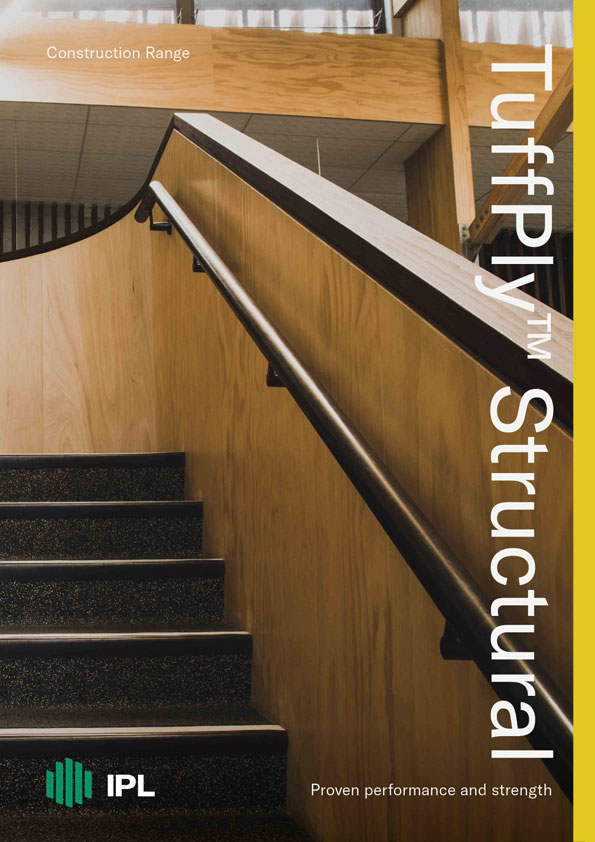
IPL TuffPly™ Structural plywood is manufactured to AS/NZ 2269:2012, and is suitable for design of earthquake and wind bracing for timber framed buildings in accordance with design codes NZS 3603 and AS/NZ 1170. This has been confirmed by EWPAA testing.
As IPL TuffPly™ Structural plywood is an integral part of the building structure, it must be durable in each application i.e. have atleast 50 years durability rating. In interior dry applications (i.e. 18% moisture content or less) untreated IPL TuffPly™ Structural plywood is acceptable for use.
However, in applications where IPL TuffPly™ Structural plywood may be subject to wetting, dampness or condensation (basically where the moisture content may exceed 18% for prolonged periods), IPL TuffPly™ Structural plywood must be preservative treated to at least H3.2 hazard rating and fixed with non-corrosive fasteners (i.e. stainless steel or silicone bronze).
Cut edges must be resealed with timber preservative. Soudal Metalex or similar.
IPL TuffPly™ Structural plywood can be left exposed to the weather for up to 3 months, but the surface will deteriorate gradually over a period of time with checking (fine splits) etc. The structural integrity of the sheets will remain even though exposed during construction.
IPL TuffPly™ is to be installed and fixed as per the building design. As plywood dimensions can vary with changes in ambient humidity and wetting during construction, it is recommended to allow expansion gaps between adjacent panel edges of at least 2mm.
When used as a bracing element the minimum fastener requirement for 7mm IPL TuffPly™ is 50mmx 2.8mm dia hot dip galvanised flat head power driven or hand driven nails.
In sea spray zone D, stainless steel annular groove or ringshank nails must be used. For bottom plate hold downs refer to GIB HandiBrac® installation instructions for correct installation and bolt types to be used for concrete and timber floors. Ground clearance must be as specified in NZBC Acceptable Solution E2/AS1.


.png)


.svg)